Desert Landscape
Beyond the Dust: Understanding the Desert Landscape on a Cabo ATV Outing
Get to know the Cabo desert before your ATV outing: cactus forms, dry channels, regional wildlife context, and useful landscape questions for your guide.
ATV Cabo ·
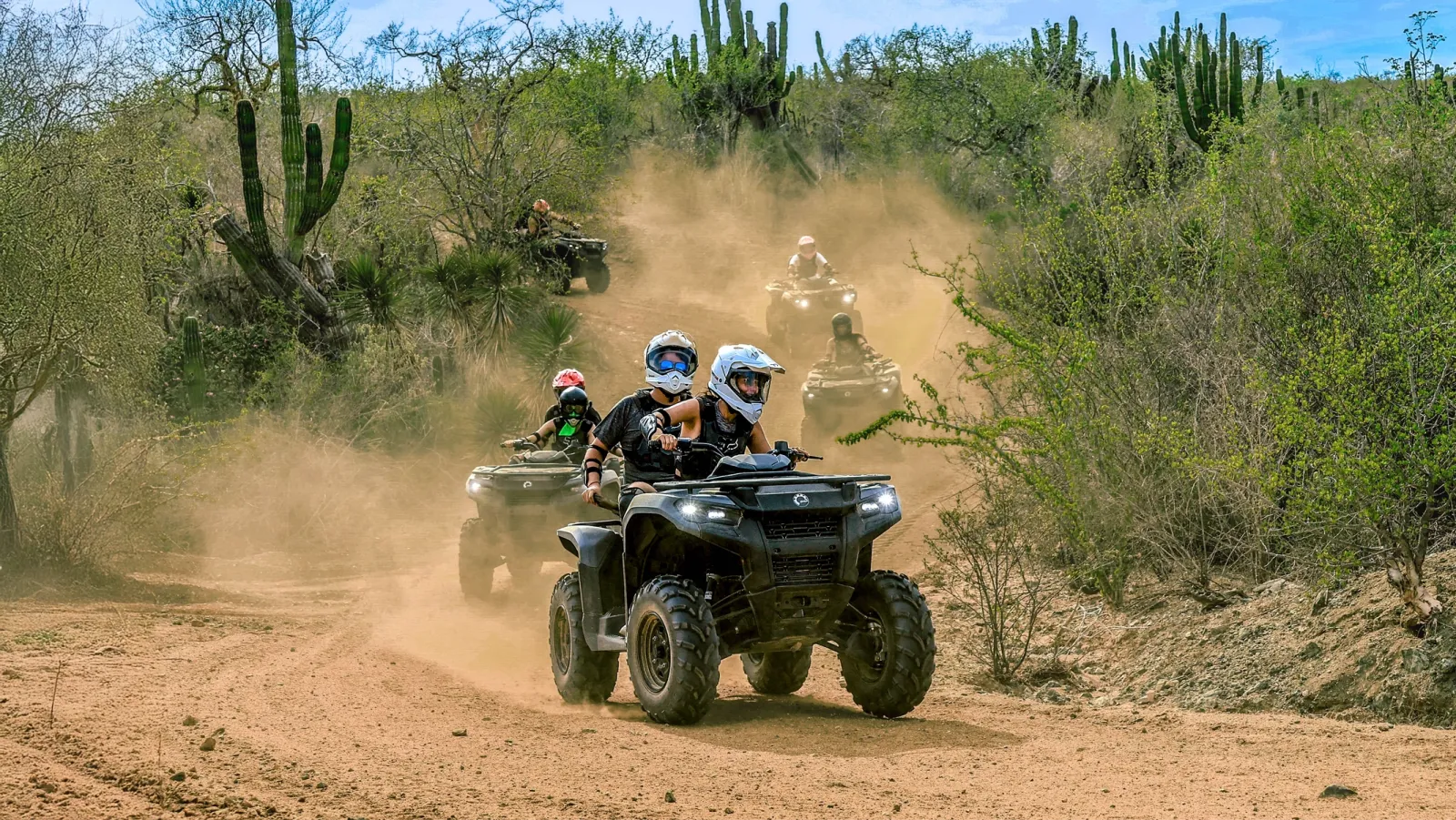
A Cabo ATV outing introduces a side of Los Cabos that is easy to miss from a beach chair: tall cacti, low vegetation, dry channels, and the shapes of the surrounding hills. A little context before you go can make that scenery more meaningful. Save your landscape questions for the briefing or a moment the guide chooses; while riding, keep your attention on the route and instructions.
This is a guide to understanding the regional setting, rather than an inventory of plants or wildlife on a particular departure. Cabo Adventures describes its ATV experience as a circuit at Tierra Sagrada. The exact features you pass and any opportunities to discuss them should be confirmed with your guide.
See the guided desert experience →
See the desert as a living landscape
The Los Cabos Tourism Board describes a region with cacti, succulents, and other plants adapted to dry conditions. Those plants provide food and habitat for animals. That makes the vegetation part of a living environment, even when the first things you notice are dust and open ground.
Start with shapes rather than names: upright cactus stems, branching forms, shrubs, and the spaces between them. The existing tour photograph above shows tall cacti and dense vegetation beside the trail. It is a useful visual introduction, but it does not identify individual species or establish how the route will look on your date.
Recognize cactus forms without guessing species
Cardón cacti feature in the tourism board’s descriptions of the Los Cabos desert. That regional reference is a starting point for a question, not a reason to label every tall cactus you see as a cardón. A distant view or a quick glance from a vehicle is not enough for a confident identification.
If a plant catches your interest, ask the guide its local name and whether they can identify it confidently. You can also ask what distinguishes it from similar plants nearby. There is no need to touch it, collect a sample, or leave the route to make the outing more interesting.
Read the terrain: dry channels, slopes, and ridgelines
Regional tourism descriptions mention arroyos as part of the desert landscape, and ATV Cabo’s tour page refers to dry riverbeds and canyon scenery. An arroyo is a channel associated with water flow that may be dry when you see it. It is a feature of the terrain, not an invitation to choose your own route.
Before the ride or during an authorized pause, ask how the lower channels relate to the higher ground around you. A broad view can help you distinguish a channel from a hillside and a distant ridgeline from the trail immediately ahead. Leave rock types, geological ages, and the history of a particular landform to a reliable local explanation rather than guessing from its color.
Keep regional wildlife separate from tour expectations
A destination-wide wildlife guide covers far more than one ATV circuit. A species being present somewhere in Los Cabos does not establish that it lives beside this trail or that you will see it during your outing. Treat any animal encounter as incidental; this article does not promise sightings or a wildlife-viewing stop.
Likewise, a regional article about Sierra de la Laguna or another adventure operator does not describe this tour’s itinerary. Ask about the setting of your booked circuit rather than assuming that every landscape mentioned in a Los Cabos guide is part of the same excursion.
Bring a few questions for the guide
- Which plants can you confidently identify along this particular circuit?
- What is the local name for the terrain feature we can see from here?
- Is there an appropriate time to ask landscape questions, or should we save them until after the ride?
- Are any stops planned, and what should we do if we would like to look more closely at something?
These are questions to ask, not included services. An ATV excursion does not automatically include a naturalist presentation, a botany walk, or a stop at each point of interest. Follow the guide’s route and stopping instructions. The operator’s current ATV page also prohibits phones, cameras, and GoPro devices during the ride, so do not plan to photograph plants while moving.
Prepare your questions before your first guided ride →
If you are still deciding what kind of vehicle experience you want, start with the practical differences before choosing your outing. The landscape provides context; the vehicle and the specific activity you reserve determine the experience you should prepare for.
Understand the ATV and UTV vehicle experience →
Sources reviewed October 26, 2026: Los Cabos Tourism Board, Flora & Fauna and 3 Desert Adventures to Celebrate Cactus Day in Los Cabos; Cabo Adventures, ATV Tour & Desert Adventure; and ATV Cabo’s tour page. Regional descriptions are used as background, with circuit-specific identifications and stopping arrangements left for the guide to confirm.
← All articles